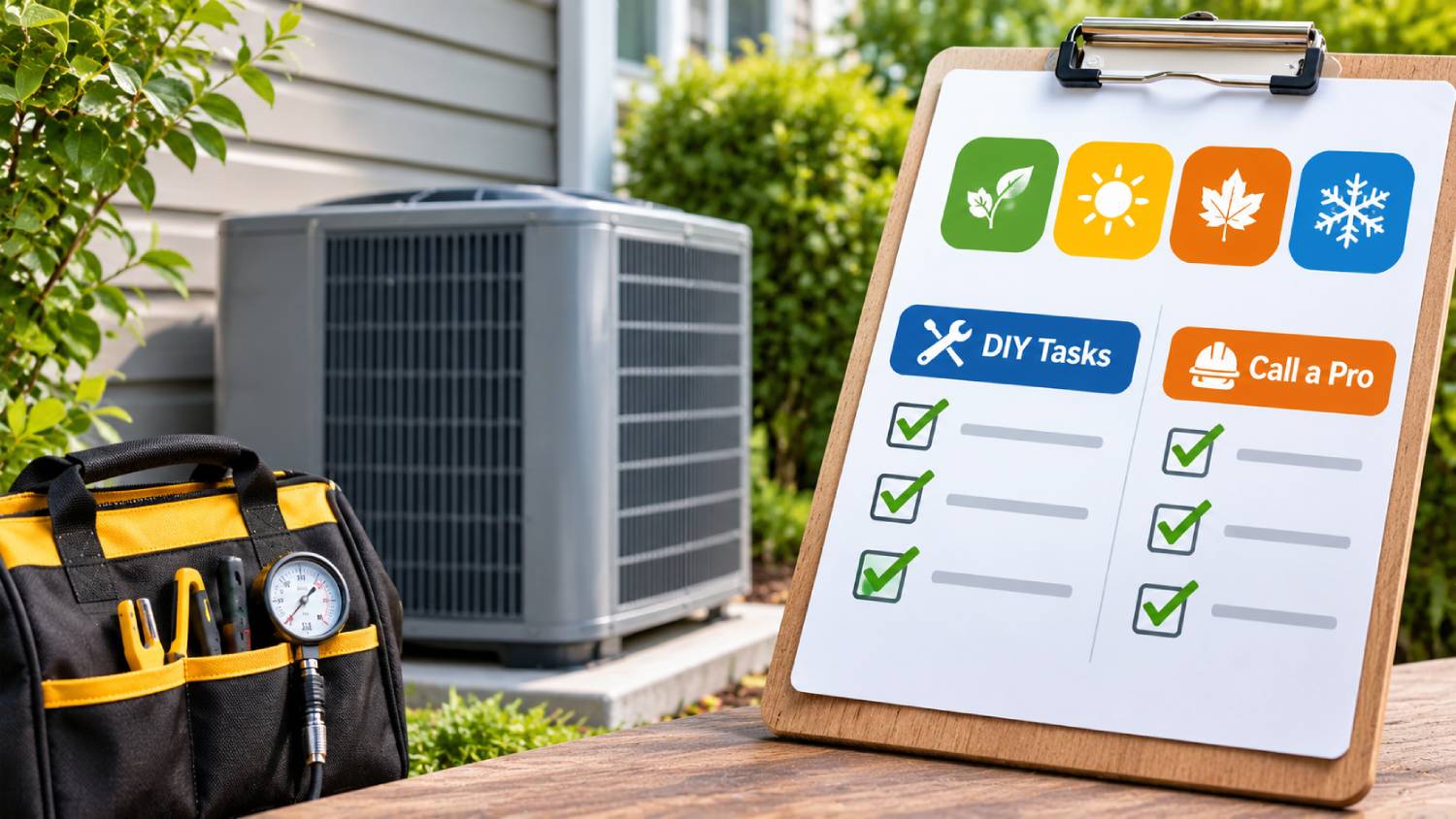
Your heating and cooling system works hard all year. A little care each season keeps it efficient, extends its life and helps you avoid expensive breakdowns.
This checklist shows what you can safely do yourself and where a trained technician is the better choice.
Why Seasonal HVAC Maintenance Matters
Regular upkeep keeps airflow clear, parts clean and energy bills under control. It also catches small faults before they become major repairs.
Coastal homes face extra challenges. Salt air, humidity and long cooling seasons put added strain on outdoor units and coils. Staying ahead of wear is cheaper than an emergency call-out in July.
Spring Checklist: Prepare for the Cooling Season
Spring is the best time to get your air conditioning ready before the heat arrives.
DIY tasks:
- Replace or clean the air filter
- Clear leaves, debris and plant growth from around the outdoor unit (keep a 60 cm gap)
- Check that vents and registers are open and unblocked
- Test the thermostat and replace its batteries
- Pour a little water into the condensate drain pan to check it drains freely
Leave to a pro:
- Checking refrigerant levels
- Cleaning the evaporator and condenser coils
- Testing electrical connections and capacitors
If you are looking for dependable HVAC services in Ponte Vedra Beach, FL, book a pre-season tune-up in March or April, before demand peaks.
Summer Checklist: Keep Things Running Smoothly
Your system runs hardest in summer, so small habits make a real difference.
DIY tasks:
- Check the filter monthly, as dust and pollen clog it quickly
- Rinse the outdoor unit gently with a garden hose (power off first)
- Keep the thermostat at a steady, sensible setting rather than switching it constantly
- Watch for ice on the refrigerant lines or pooling water indoors
Leave to a pro:
- Weak airflow or warm air from the vents
- Strange grinding, banging or squealing noises
- Frequent short cycling (turning on and off repeatedly)
Ice or water leaks are warning signs. Switch the system off and call a technician rather than running it.
Autumn Checklist: Get Ready for Cooler Weather
Even in a mild climate, your heating system may sit unused for months. Test it before you need it.
DIY tasks:
- Replace the filter again
- Run the heating for 15–20 minutes to check it starts and blows warm air
- Clear any dust from vents and return grilles
- Look for unusual smells at start-up (a brief dusty smell is normal)
Leave to a pro:
- Inspecting the heat exchanger or heat pump components
- Checking gas connections and combustion safety
- Testing the carbon monoxide detectors’ placement and function with your technician
Never attempt gas or electrical repairs yourself. They are dangerous and may invalidate your warranty.
Winter Checklist: Protect Comfort and Efficiency
Winter in North Florida is short but can still bring sharp cold snaps. Your system needs to cope.
DIY tasks:
- Keep filters fresh during periods of heavy use
- Make sure furniture and curtains are not blocking vents
- Keep outdoor units clear of fallen leaves and debris
- Check for draughts around doors and windows to reduce the workload
Leave to a pro:
- Heat pump defrost problems
- Uneven heating between rooms
- Unexplained spikes in your energy bills
DIY or Professional? A Quick Guide
| Task | DIY | Professional |
| Changing filters | ✔ | |
| Clearing debris outside | ✔ | |
| Thermostat battery swap | ✔ | |
| Refrigerant checks | ✔ | |
| Electrical testing | ✔ | |
| Coil cleaning | ✔ | |
| Gas and safety inspections | ✔ |
As a rule, if a task needs tools, refrigerant handling or live electrics, hand it over to a licensed technician.
Signs You Should Call a Professional Straight Away
- Burning or musty smells
- Persistent loud noises
- Water leaking around the indoor unit
- The system will not switch on
- Rising bills with no change in usage
Acting quickly often means a smaller repair and less disruption.
Frequently Asked Questions
How often should I service my HVAC system?
Twice a year is ideal: once in spring for cooling and once in autumn for heating. Homes with pets or allergy sufferers may benefit from extra checks.
How often should I change my air filter?
Every one to three months is typical. Check monthly in summer or if you have pets.
Can I clean the coils myself?
Light rinsing of the outdoor unit is fine. Deep coil cleaning needs specialist products and care, so it is best left to a professional.
Does regular maintenance really save money?
Yes. A clean, well-adjusted system uses less energy and is less likely to fail unexpectedly, which helps reduce both running and repair costs.
What does a professional tune-up include?
Typically, a technician inspects electrical parts, measures refrigerant, cleans coils, checks airflow, tests safety controls and looks for wear.
Final Words
A simple routine goes a long way. Change your filters, keep the area around your unit clear and listen for early warning signs. Then let a qualified technician handle the technical work twice a year.
Small, regular efforts protect your comfort, your wallet and your equipment. Set a few calendar reminders today, and your home will stay comfortable whatever the season brings.