Central Valley summers can put serious demands on a home’s air conditioning system. When temperatures climb and your AC runs for hours at a time, small maintenance issues can quickly turn into poor airflow, higher energy use, or an unexpected breakdown. That is why Central Valley summer AC care should start before the hottest days arrive.
A little preparation can make a meaningful difference. From changing filters and clearing the outdoor unit to scheduling professional service, these practical steps can help your cooling system work reliably when you need it most. For homeowners who want professional help, AC repair and maintenance for hot Central Valley summers can address problems before they become larger repairs.
Why Central Valley Summer AC Care Matters
An air conditioner that works occasionally has an easier job than one operating through long stretches of extreme summer heat. During periods of heavy use, components such as filters, coils, blower parts, electrical connections, and condensate drains all need to function properly.
The U.S. Department of Energy and ENERGY STAR recommend regular HVAC maintenance because neglected equipment can lose efficiency and become more vulnerable to problems. Annual pre-season inspections are particularly useful because they give homeowners an opportunity to identify issues before peak cooling demand.
Start With the Air Filter
One of the simplest maintenance tasks is also one of the easiest to overlook. A dirty filter restricts airflow, forcing the system to work harder to circulate conditioned air.
Check your filter regularly, especially during periods of heavy AC use. ENERGY STAR recommends checking it monthly and replacing it when dirty, with replacement at least every three months as a general minimum for many systems. However, the right schedule depends on the filter, equipment, household conditions, and manufacturer recommendations.
A household with pets, construction dust, or other sources of airborne particles may need to check the filter more frequently.
Keep the Outdoor AC Unit Clear
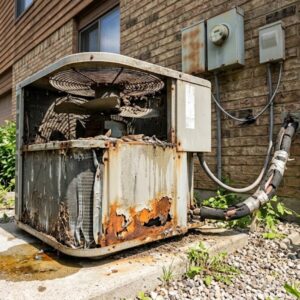
Your outdoor condenser needs adequate airflow to release heat. Leaves, grass clippings, dirt, and other debris can accumulate around the unit and interfere with that process.
Walk around the outdoor unit periodically and make sure the surrounding area is reasonably clear. Avoid storing objects directly against it, and remove visible debris around the equipment without damaging the fins or other components.
More involved coil cleaning is best left to a qualified HVAC professional. Damaged fins or improperly handled components can create additional problems rather than solving the original one.
Schedule Professional AC Maintenance
Some parts of AC maintenance require more than a homeowner’s visual inspection. A professional service visit can identify developing problems that may not be obvious during everyday operation.
A typical cooling-system check can include:
- Inspecting electrical connections and system controls
- Checking refrigerant charge against manufacturer specifications
- Inspecting and cleaning indoor and outdoor coils
- Checking blower components and airflow
- Inspecting the condensate drain
- Evaluating thermostat operation
- Looking for signs of unusual wear or performance problems
ENERGY STAR specifically recommends annual pre-season checkups and notes that coil cleanliness, refrigerant levels, blower operation, and drainage are important parts of cooling-system maintenance.
Scheduling this work before the hottest part of summer can also make it easier to address minor issues before they become urgent.
Pay Attention to Warning Signs
Your AC often gives you clues before it stops working completely. Recognizing those signs can help you address a problem earlier.
Watch for changes such as:
- Air coming from vents that feels warmer than usual
- Weak or inconsistent airflow
- Unusual buzzing, rattling, or grinding sounds
- Water collecting around the indoor equipment
- The system turning on and off repeatedly
- Rooms that no longer cool evenly
- An AC unit running for unusually long periods without reaching the thermostat setting
None of these symptoms automatically points to one specific repair. Several different problems can produce similar signs, so avoid assuming that a refrigerant issue, electrical failure, or compressor problem is responsible without a professional diagnosis.
Help Your AC Cool More Efficiently
AC maintenance is only part of staying comfortable during summer. Your home itself also affects how hard the system has to work.
Keep doors and windows closed while the AC is running, particularly during the hottest part of the day. Use blinds, curtains, or other window coverings to reduce direct solar heat gain, and make sure furniture is not blocking supply or return vents.
Your thermostat location matters, too. The Department of Energy notes that heat-producing appliances placed close to a thermostat can influence its temperature reading and cause the AC to operate longer than necessary.
If your system has programmable or smart thermostat features, use them thoughtfully around your household schedule rather than cooling an empty home unnecessarily.
Know When Repair Makes More Sense Than Waiting
A common mistake is ignoring a minor performance change because the AC is still technically running. Continuing to operate equipment that is showing clear signs of trouble can make an already developing problem harder to manage.
If your system is struggling to cool the home, making unusual noises, leaking water, or repeatedly cycling, arrange an inspection rather than waiting for a complete failure. A professional can determine whether the issue is relatively straightforward or whether an aging component needs more attention.
For older systems, it can also be useful to discuss the equipment’s overall condition with an HVAC professional. ENERGY STAR recommends having systems that are more than 10 years old or no longer keeping a home comfortable evaluated to determine whether repair or replacement makes more sense.
A Simple Summer AC Care Routine
For Central Valley homeowners, a practical routine can be as simple as:
- Check the filter monthly and replace or clean it according to the manufacturer’s instructions.
- Inspect the outdoor unit regularly and keep the surrounding area free of obvious debris.
- Watch for performance changes, including weak airflow, unusual sounds, leaks, or poor cooling.
- Schedule professional maintenance before peak summer demand when possible.
- Keep vents and returns unobstructed so air can circulate properly.
- Use window coverings and sensible thermostat settings to reduce unnecessary cooling demand.
Conclusion
Effective Central Valley summer AC care is about more than keeping your home cool—it is about preparing your air conditioning system to handle demanding summer conditions reliably. Simple habits such as checking the AC filter, keeping the outdoor condenser clear, maintaining unobstructed vents, monitoring unusual noises or performance changes, and scheduling professional HVAC maintenance can make a significant difference. Addressing problems early is especially important when an air conditioner is running frequently during periods of extreme heat.
By combining routine homeowner maintenance with professional AC inspections and timely repairs, Central Valley residents can improve cooling reliability and reduce the risk of unexpected breakdowns. The most important step is not to wait until your air conditioner stops working completely. Preventive AC maintenance and early attention to warning signs are key to staying cool throughout the Central Valley summer.