An awning can make a patio, terrace or garden seating area more useful when the weather changes. However, “waterproof” and “water-resistant” do not mean the same thing, and the difference matters when rain lasts longer than a brief shower.
If reliable rain protection is a priority, a retractable waterproof awning may be more suitable than a standard water-resistant model. The right choice depends not only on the fabric, but also on the awning’s pitch, drainage, installation and intended use.
What Does Water-Resistant Mean for an Awning?
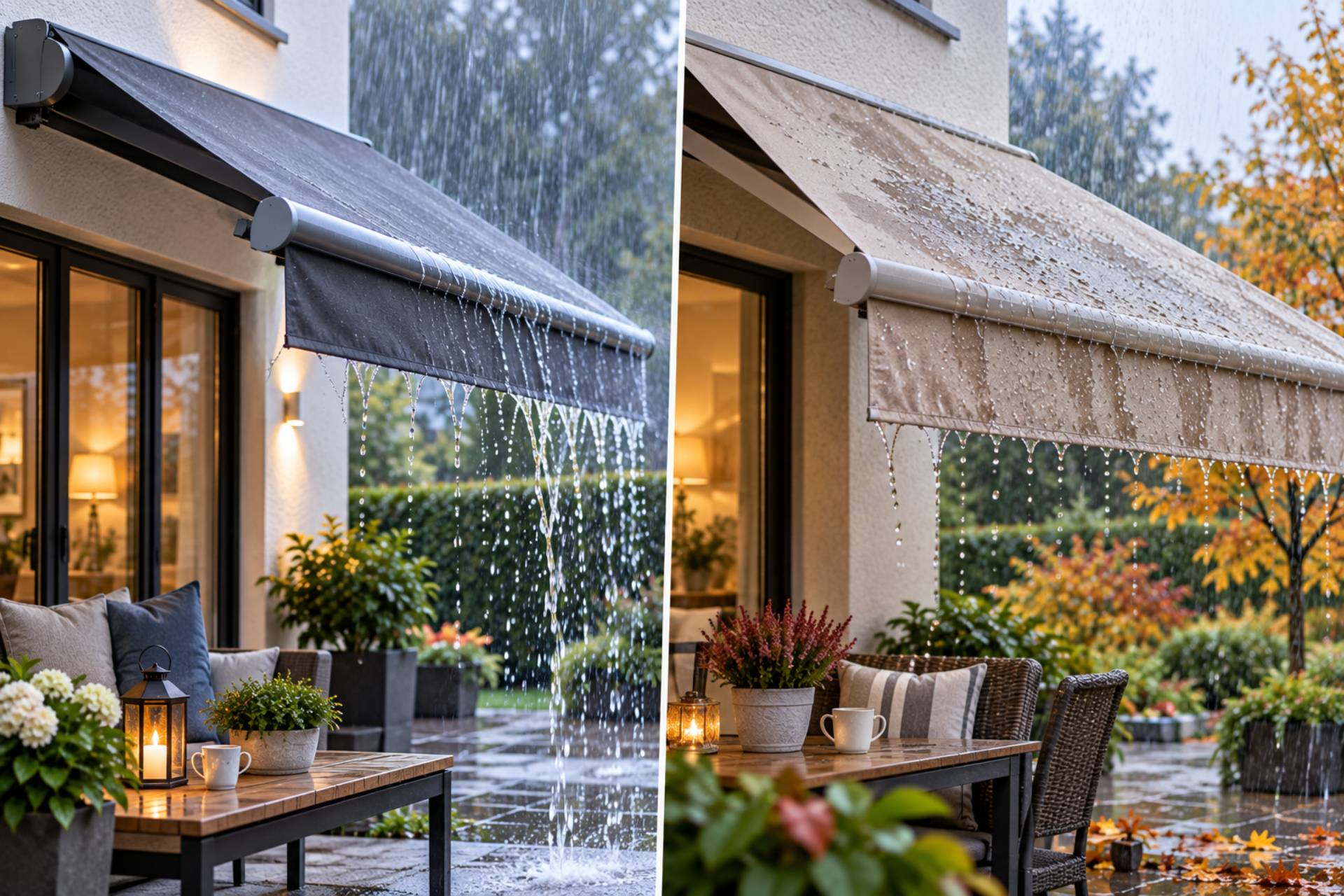
A water-resistant awning is designed to repel a certain amount of moisture rather than completely stop water passing through the material. Light rain may bead on the surface and run off, especially when the fabric is clean and properly tensioned.
The limitation appears during heavier or prolonged rainfall. Water may eventually soak into the fabric or pass through the weave, seams or stitching. This does not necessarily mean the awning is faulty. It may simply be a product intended mainly for shade and occasional showers.
Water resistance can also reduce over time if the surface becomes dirty or worn. Owners should therefore follow the manufacturer’s cleaning and care instructions.
What Makes an Awning Waterproof?
A waterproof awning is intended to prevent rain from penetrating the canopy under the conditions for which it is designed. This usually depends on suitable fabric construction, protective finishes, secure seams and correct installation.
Fabric alone does not determine rain performance. Water must also leave the surface efficiently. If the canopy is installed too flat, rain can collect instead of running towards the edge. Standing water adds weight and can strain the fabric, arms and fixings.
The angle of the extended canopy is therefore important. A suitable slope encourages water to run away rather than pool. The required pitch varies between systems, so it should follow the manufacturer’s guidance.
Why Pitch and Drainage Matter
Even waterproof fabric can perform poorly if rainwater has nowhere to go. The canopy needs enough fall to move water towards its drainage edge.
Poor drainage can allow water to gather in low points, distort the fabric or add load to the mechanism. Runoff may also fall in an inconvenient place, such as beside a doorway, seating area or walkway.
Before installation, consider where water will travel once it leaves the canopy. Good rain protection should not create a separate drainage problem near the building.
Waterproof Does Not Mean Suitable for Every Weather Condition
A waterproof rating does not mean a retractable awning should remain extended in every type of weather. Rain and wind affect an awning differently.
A canopy may shed rain effectively but still need to be retracted when winds become strong. Gusts can place considerable pressure on the fabric and folding arms, particularly on larger awnings. Always operate the system within the limits stated by its manufacturer.
Some motorised awnings can include weather sensors, but these should be treated as additional protection rather than a replacement for sensible use.
Key Factors to Check Before Choosing an Awning
When comparing waterproof and water-resistant options, look beyond the product description. Check:
- Whether the fabric is waterproof or only water-resistant.
- How it performs during sustained rain rather than a brief shower.
- The recommended pitch for effective runoff.
- How seams, edges and stitching manage water.
- Where runoff will fall when the awning is extended.
- The wind limits and when the awning should be retracted.
- How the fabric should be cleaned and dried.
- Whether the cassette or housing protects the fabric when closed.
These points can reveal important differences between products that may otherwise look very similar.
What Happens If a Retractable Awning Gets Wet?
Getting wet is not automatically a problem for an awning designed for outdoor use. The main concern is what happens afterwards. Leaving damp fabric enclosed for a long period can contribute to staining, odours or mould growth, depending on the material and conditions.
If an awning has been retracted while wet because the weather has worsened, it should generally be extended again when conditions improve so the fabric can dry. Follow the care instructions supplied for the specific material.
Keeping the canopy free from leaves, dirt and debris also helps water move across the surface as intended.
Which Type Is Better for the British Climate?
There is no single answer for every property. A water-resistant awning may be suitable where the main purpose is sun shading and the canopy will normally be retracted when rain starts.
A waterproof model is more appropriate where rain protection is a regular part of how the outdoor area will be used. Even then, the whole system matters. Correct pitch, drainage, secure fixing and sensible operation all contribute to effective shelter.
Location also matters. An exposed garden, sheltered courtyard or coastal property can face very different weather conditions, while the awning’s size and projection affect the forces placed on the structure.
When Professional Advice Is Worthwhile
Professional advice can be useful when the awning will cover a large area, the wall construction is uncertain, or dependable rain protection is important. An installer can assess the fixing area, projection, suitable pitch and likely drainage path.
It is also worth explaining how you expect to use the awning. Someone who mainly wants summer shade may need a different specification from someone who expects to use the space regularly during rainfall.
Final Considerations
Water-resistant and waterproof awnings can both provide useful outdoor shelter, but they are intended for different levels of rain exposure. Water-resistant fabric is generally better suited to light, occasional showers, while a waterproof system is designed to provide more reliable protection when rain is a normal part of use.
Before choosing, check the fabric specification, canopy pitch, drainage arrangement, wind limits and maintenance requirements. If rain protection is especially important, ask for clear guidance on how the complete awning should be installed and operated rather than relying on a single product label.